Introduction
The game is titled Everything Is Alive, Except the Brain.
It was created as part of the 2025 CIGA Game Jam, under the theme “Everything Is Alive.”
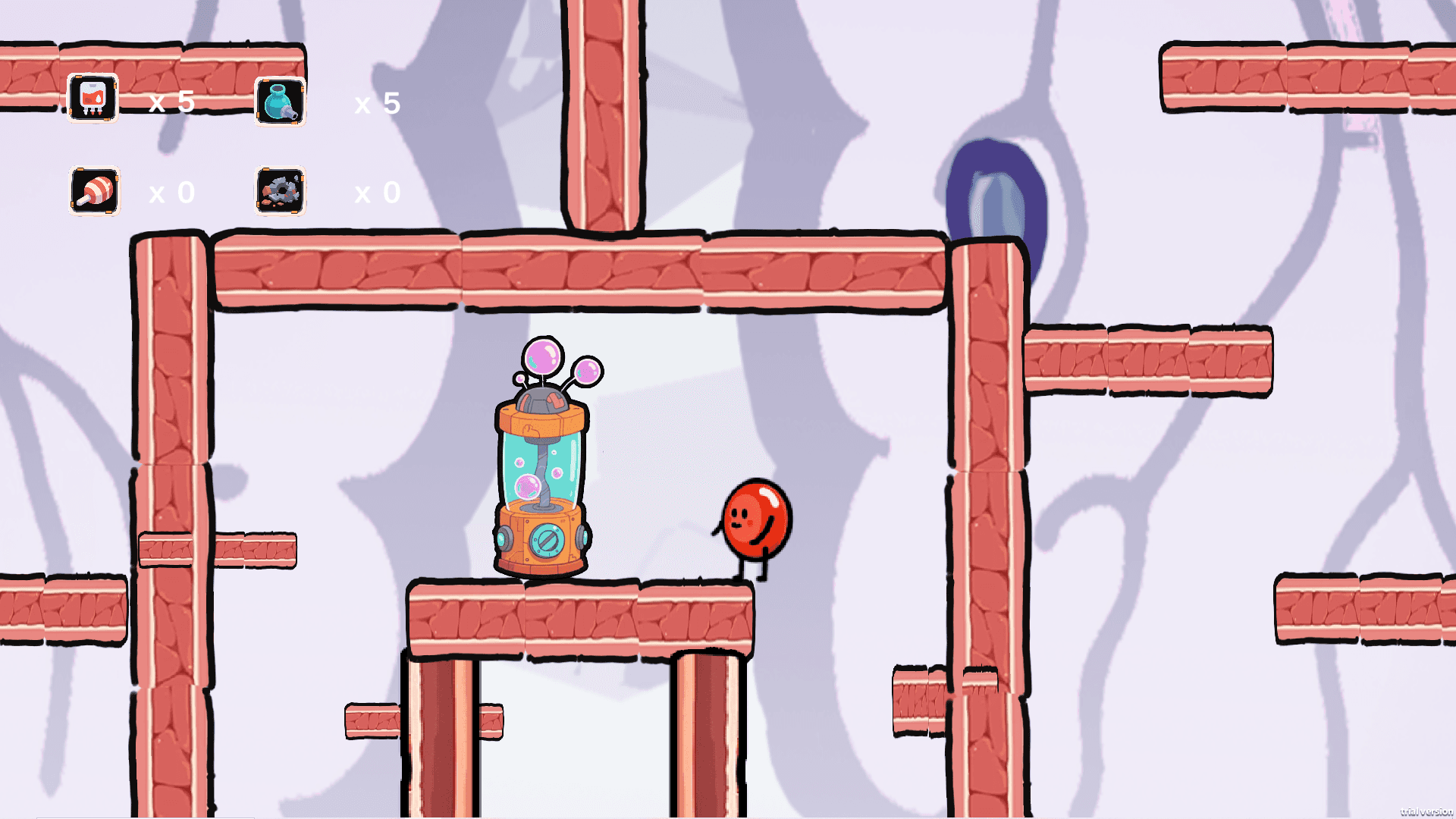
In this game, players take on the role of a red blood cell inside the human body, responsible for transporting and organizing various nutrients while removing waste. Through a humorous and playful narrative tone, the game depicts a surreal recovery process after the player’s brain has temporarily shut down under extreme pressure. The overall theme embraces a lighthearted, absurd, and self-mocking style, blending biological metaphors with nonsensical comedy.
During development, I served as the team leader and lead designer, and was responsible for core game planning, level design, and character animation and illustration, guiding both the gameplay structure and the expressive visual presentation of the project.
Main Discussion
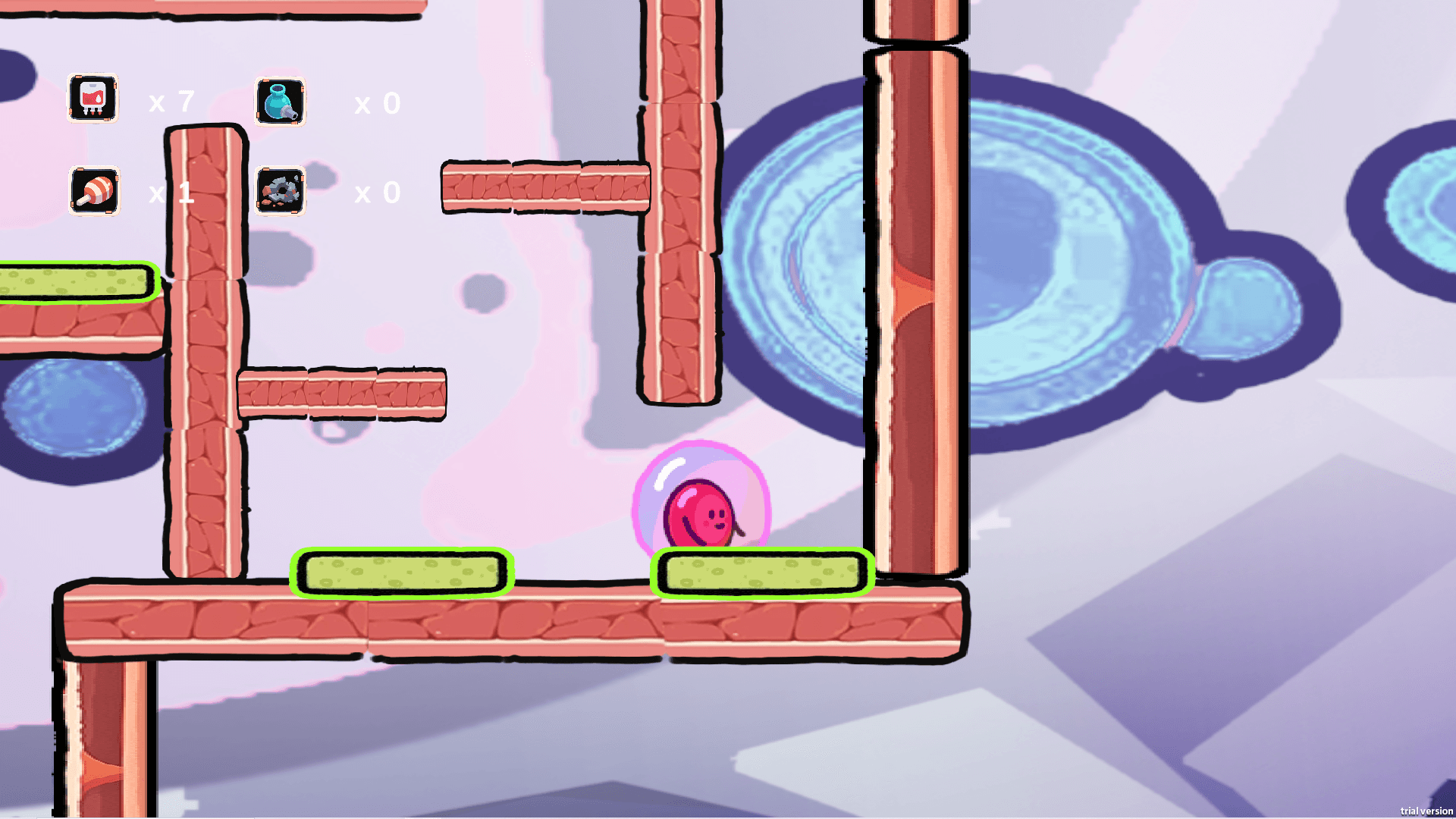
In this project, the red blood cell controlled by the player can travel to the stomach to collect glycogen, to the lungs to obtain oxygen, and to the heart to acquire platelets, then deliver these resources to the brain. At the same time, players must transport the waste generated by the brain to the kidneys for disposal in order to restore normal brain function.
Players can consume glycogen to create a protective shield that guards against stomach acid, oxygen to perform a dash, and platelets to activate dynamic platforms. The core challenge lies in strategic resource management—deciding how to use abilities to transport materials more efficiently while minimizing the number of delivery trips. Carrying waste imposes penalties such as restricted jumping and reduced movement speed, requiring players to carefully plan their routes.
Key Takeaways
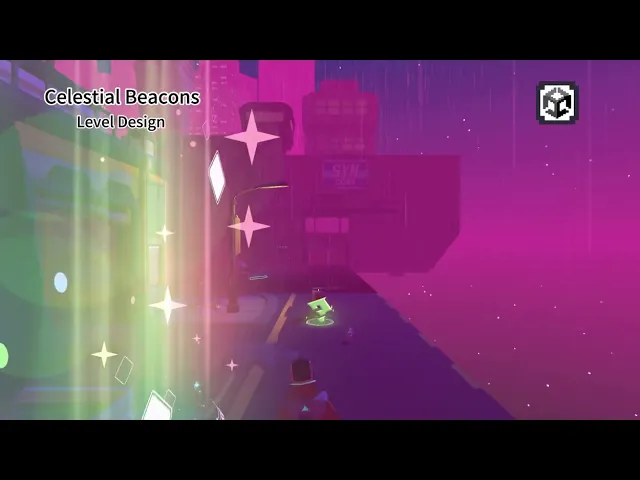
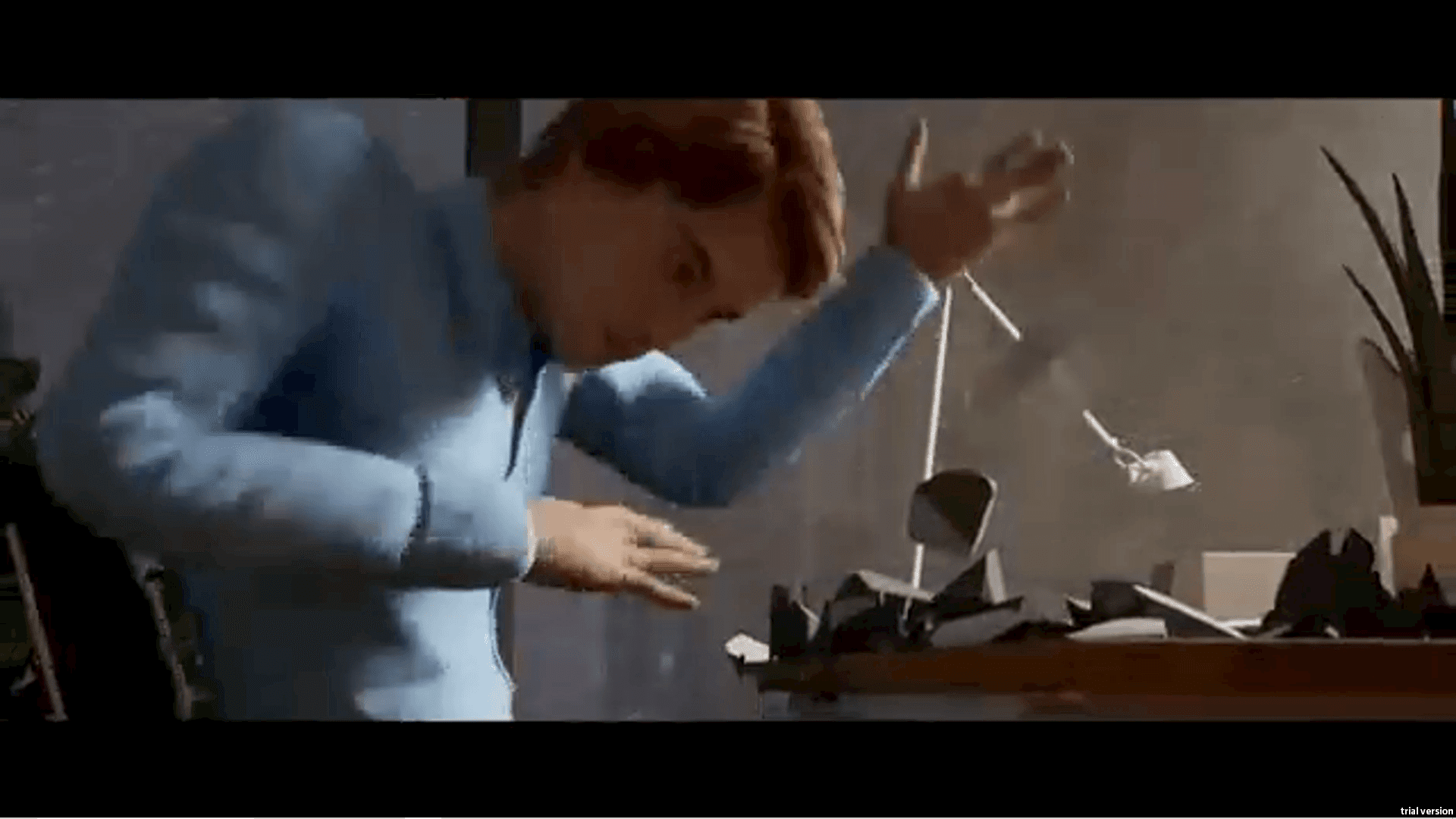
This game features a clever design that creates a strong sense of immersion while embracing a playful, absurd tone, and achieves a smooth transition between 2D and 3D. Players begin as an employee developing a game, and the “game” they are creating is the very experience being played. As the camera moves toward the computer screen, the perspective naturally shifts into a 2D gameplay view.
In fact, the events within the game world are also happening to the employee himself, who serves as a symbol of the competition’s participants. If the player fails to complete the game within a certain time limit, the scene abruptly switches to the game engine interface under development, followed by the computer exploding, while the employee stares at it in confusion—representing his brain crashing and shutting down as well.